Before starting my article I will like to say a few words about health.
"Every human being is the author of his own health or disease."
"He, who has health, has hope. And he, who has hope, has everything."
"It is health that is real wealth and not pieces of gold and silver."
The rose naturally conjures up images and thoughts of love and romance for almost all people. Love is a natural healer. That is one big health benefit! The rose is a beautiful exquisite flower no doubt. It is used in flower arrangements, bouquets, as a part of decorations at weddings and celebrations and it even forms a part of wreaths on coffins. Even just looking at a rose brings pleasure to most people. The beauty and delicate fragrance of the rose has universal appeal. This lovely flower has many other uses other than being decorative or an instrument of love and romance.
Rose water:
The petals of the rose flower are used to make Rose-water. Rose water has a lovely fragrance. It is used as a part of many ceremonies. In India guests are welcomed by sprinkling rose water on them.
Rose water is an essential part of many beauty treatments. Rose water is used as an astringent and sometimes as a base for astringent and skin toner.
Rose water is used to make beauty face masks. Mix a bit of sandalwood powder in rose water. Apply a thin layer of this paste to your face avoiding the eye contour and then wash it off after it dries.
Sometimes rose water is applied after steaming the face or some other beauty treatment.
You can make rose water at home if you wish. Take fresh rose petals and pour just enough water to cover them. Boil or simmer on a low flame for about 45 minutes and allow the decoction to cool. Strain and squeeze out the rose petals and voila, you have your rose water. You can bottle and refrigerate it. Use the homemade rose water within a week to ten days.
If your eyes feel tired, just dip a swab of cotton in cool rose water and place it over your eyes. This will cool and refresh your eyes.
The rose is also used to make perfumes.
Rooh afza- rose syrup
making Gulkand at home
commercially available gulkand
The rose by any other name..
Other than external uses, the rose is also eaten or consumed. Rose essence is used in foods. Fresh rose petals are sometimes used to garnish sweets such as jelebi , phirni or sweets such as mawa cakes etc.
Rose essence is used in flavouring beverages. Rooh-afza is commercially available popular rose syrup. Rose syrup added to chilled milk or lassi makes an excellent drink in the summers.
To make rose syrup:
Boil water and sugar. Add one spoon sugar for a cup of water. Add rose essence to taste and red food color. Chill and serve. You can boil rose petals instead of using rose essence too.
You can make a concentrate of rose syrup. Just add more sugar and boil the mixture to make one thread consistency sugar syrup. You can add rose essence and bit of red food colour. then let it cool. This concentrate can be diluted before serving. You can add rose syrup to lemonade too.
Gulkand:
This is a sweet preserve made from rose petals and sugar. (gul means rose, kand means sweet or sugar) many people make gulkand at home, though it is available in the market.
Gulkand has many medicial uses as per ayurveda. It is used to treat acidity and constipation as it is an excellent digestive. Gulkand can be eaten just as it is or it can also can be put into paan and eaten, or you can add it to ice-creams, milk shakes and kulfi. Edible Silver foil is also added to gulkand at times, and sometimes gold powder is also added.
Gulkand has cooling properties. It is used as a cooling tonic to treat fatigue, and heat-related conditions. Eating a spoonful of gulkand every day is good for memory, eyesight, cheerfulness and it is a good blood purifier as well.
To make gulkand:
Use a wide-mouthed airtight glass jar. Ensure it is clear glass and not coloured glass. Place the fresh rose petals and sugar in alternate layers in this jar. Place this jar in direct sunlight for 6 hours per day for about 3 weeks to a month. Every other day, stir the contents with a wooden stick. The sugar will start melting and the rose petals will change color, and there will be a good blend or rose petals and sugar. Keep the jar indoors when done. Use the homemade gulkand within a month. (Home made preparations may be liable to contamination if the utensils used are not properly sterilized so it is best to get a commercially made preparation of gulkand as it may be more hygienic and will also last longer.)
Monday, December 14, 2015
Monday, November 16, 2015
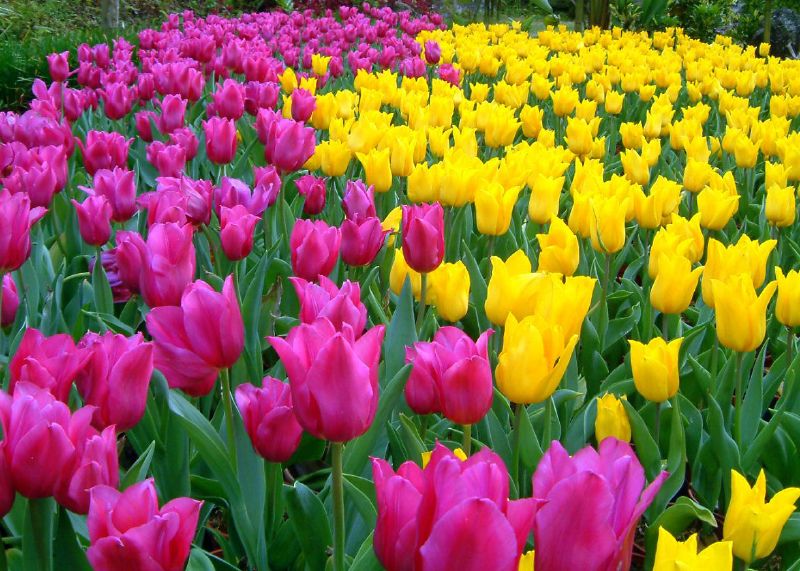
What Do You Know About Tulips?
Are you searching for the perfect flower and getting ready for your next planned event or wedding? Sometimes there is no right or wrong flower but a matter preference as to what fits your needs or what fits your personality. The 101 series is a series of articles helping to educate everyone with the contrasts of various flowers. You may want to read the others in this series as well as many other helpful articles.
There are five things to keep in mind with tulips:
1. Tulips are usually six-petaled, elongated cup-shaped flowers with slender stems and large broad leaves. Purchase or cut tulips of good size and color, although a little green tinge is all right€"they will continue to develop after cutting. The tulip should be firm to the touch, and upright. Check the inside of the blossoms for signs of pollen: The centers should be clean.
2. In aged tulips, the tips of the petals are discolored or have a transparent look. The center of the base shows signs of pollination, and the flower feels soft to the touch.
3. The so-called Dutch tulip is a shorter variety with smaller blossom size than does the French tulip. The French tulips are longer lasting as a cut flower.
4. Striped or variegated Rembrandt tulips look like flames of fire. Rembrandt tulips have long pointy petals. Parrot tulips have ruffles and fringe tulips have frayed edges.
5. When Arranging with tulips, leave plenty of room, as they continue to grow and develop after being cut. They also open and close, and reach and move towards the light. Always set an arrangement of tulips in indirect light. Large tulip leaves can be gently curled and tucked between blossoms to keep flowers in place and allow you to use fewer of them.
Here is so more factual information you may also find helpful.
Names - Tulip, tulipa
Varieties - There are 15 different divisions of tulips, with hundreds of species, the most common being the single tulip.
Colors - all colors and combinations are available except no true blue.
Scent - A few varieties have a mild, sweet scent, but most have none.
Freshness - Purchase or cut tulips when they show good size and color. A little green is fine. Tulips should be firm to the touch and upright. Check inside the blossom to see that no pollen has developed.
Vase Life - About 5 days. The French variety will last 7 days or longer.
Availability - January to May
Meaning - Declaration of true love. €I am hopelessly in love with you.€
Cost - Winter-moderately priced. Spring-inexpensive. The French variety: Winter - expensive, Spring-moderately priced.
Arranging Tip - Tulips change daily after cutting. Leave enough room for tulips to grow and move, even if they are manipulated somewhat to fit into certain combinations. See arranging tips 1, 8, 10, 13, 17, 18, 19, and 20.
Growing Tip - Tulips are easy to grow in the garden for spring color and can be forced to bloom indoors in the winter. They only bloom for a short time in the spring, so plant early-, mid-, and late blooming varieties to extend tulip time. Most tulips become exhausted after a year or two, returning shorter and smaller every spring, so pick varieties that €naturalize€ well.
Other - Tulips are heavy drinkers!
Now that you know a little bit more about tulips, it is time to check out some popular varieties.
Regular Tulips include: Assorted, rainbow, white, pink, yellow, orange, hot pink, red, lavender, purple, black jack purple.
French Tulips include: White, white Maureen, pink, yellow, orange, hot pink, red.
There are five things to keep in mind with tulips:
1. Tulips are usually six-petaled, elongated cup-shaped flowers with slender stems and large broad leaves. Purchase or cut tulips of good size and color, although a little green tinge is all right€"they will continue to develop after cutting. The tulip should be firm to the touch, and upright. Check the inside of the blossoms for signs of pollen: The centers should be clean.
2. In aged tulips, the tips of the petals are discolored or have a transparent look. The center of the base shows signs of pollination, and the flower feels soft to the touch.
3. The so-called Dutch tulip is a shorter variety with smaller blossom size than does the French tulip. The French tulips are longer lasting as a cut flower.
4. Striped or variegated Rembrandt tulips look like flames of fire. Rembrandt tulips have long pointy petals. Parrot tulips have ruffles and fringe tulips have frayed edges.
5. When Arranging with tulips, leave plenty of room, as they continue to grow and develop after being cut. They also open and close, and reach and move towards the light. Always set an arrangement of tulips in indirect light. Large tulip leaves can be gently curled and tucked between blossoms to keep flowers in place and allow you to use fewer of them.
Here is so more factual information you may also find helpful.
Names - Tulip, tulipa
Varieties - There are 15 different divisions of tulips, with hundreds of species, the most common being the single tulip.
Colors - all colors and combinations are available except no true blue.
Scent - A few varieties have a mild, sweet scent, but most have none.
Freshness - Purchase or cut tulips when they show good size and color. A little green is fine. Tulips should be firm to the touch and upright. Check inside the blossom to see that no pollen has developed.
Vase Life - About 5 days. The French variety will last 7 days or longer.
Availability - January to May
Meaning - Declaration of true love. €I am hopelessly in love with you.€
Cost - Winter-moderately priced. Spring-inexpensive. The French variety: Winter - expensive, Spring-moderately priced.
Arranging Tip - Tulips change daily after cutting. Leave enough room for tulips to grow and move, even if they are manipulated somewhat to fit into certain combinations. See arranging tips 1, 8, 10, 13, 17, 18, 19, and 20.
Growing Tip - Tulips are easy to grow in the garden for spring color and can be forced to bloom indoors in the winter. They only bloom for a short time in the spring, so plant early-, mid-, and late blooming varieties to extend tulip time. Most tulips become exhausted after a year or two, returning shorter and smaller every spring, so pick varieties that €naturalize€ well.
Other - Tulips are heavy drinkers!
Now that you know a little bit more about tulips, it is time to check out some popular varieties.
Regular Tulips include: Assorted, rainbow, white, pink, yellow, orange, hot pink, red, lavender, purple, black jack purple.
French Tulips include: White, white Maureen, pink, yellow, orange, hot pink, red.
Wednesday, October 14, 2015
Plantwatch: Roadside wonders
Roadside verges are one of our great wild plant refuges. They are only narrow strips of land, but verges along our major roads total an area the size of the Isle of Wight. And they provide a home to more than 700 species of plants, almost half the native flora of Britain, with some of the last habitats left for many wild flowers, especially meadow plants – which is why the charity Plantlife is campaigning to get verges looked after better to encourage these wild plants.
Many of the roadside plants are flowering now, such as the familiar red clover, common buttercup, brilliant white oxeye daisy and the tall rosebay willowherb with its distinctive clusters of purply-red flowers. There are even rare flowers, such as the green-winged orchids on the M40 in Buckinghamshire, the Deptford pink in Devon and Worcestershire and wood bitter-vetch in Powys.
Perhaps most iconic of the roadside flowers out now is the beautiful star-shaped yellow flowers of St John’s wort. This was a magical flower in pagan rituals on Midsummer’s Day (traditionally 24 June and distinct from summer solstice) when the flower was burned on bonfires to purify crops. It was also believed to ward off witchcraft, although in Christian times Midsummer’s Day was turned into St John’s Day, hence the name of the plant. In herbal medicine, St John’s wort was also valued for treating wounds – recent research has shown that it can indeed fight bacterial infections – although its best known use these days is probably for calming the nervous system and treating sleeplessness and depression.

Perhaps most iconic of the roadside flowers out now is the beautiful star-shaped yellow flowers of St John’s wort. This was a magical flower in pagan rituals on Midsummer’s Day (traditionally 24 June and distinct from summer solstice) when the flower was burned on bonfires to purify crops. It was also believed to ward off witchcraft, although in Christian times Midsummer’s Day was turned into St John’s Day, hence the name of the plant. In herbal medicine, St John’s wort was also valued for treating wounds – recent research has shown that it can indeed fight bacterial infections – although its best known use these days is probably for calming the nervous system and treating sleeplessness and depression.
Wednesday, September 23, 2015
Propagating Chrysanthemums
Chrysanthemums can be propagated from seeds, cuttings, or plant division. Some chrysanthemum hybrids are patented and cannot be propagated without permission. This is usually indicated on the plant label.
Chrysanthemums actually like to be divided – the new clumps grow better than old, crowded ones. After the last spring frost when shoots are 1”- 3” tall, dig them up and carefully pull or cut apart. Throw away any half-dead or overly woody parts, and plant only the healthy divisions. Add a source of phosphorus to the planting hole, along with organic matter. Ideally, divide chrysanthemums every 3-5 years and relocate to reduce disease.
To propagate from cuttings, snip off a piece about 4”- 6” long, and remove the leaves on the bottom half. Dip in rooting hormone and insert about 1” into vermiculite, sand, or sphagnum moss. Create your own mini-greenhouse using a wire frame and plastic wrap, and place the plants under bright light (but not sunlight) until rooted.
To grow from seed, sow at least 2 months before first frost, or start indoors over the winter. The planting medium should be kept at 70-75 degrees, and seeds should germinate in 1-3 weeks.
Chrysanthemums actually like to be divided – the new clumps grow better than old, crowded ones. After the last spring frost when shoots are 1”- 3” tall, dig them up and carefully pull or cut apart. Throw away any half-dead or overly woody parts, and plant only the healthy divisions. Add a source of phosphorus to the planting hole, along with organic matter. Ideally, divide chrysanthemums every 3-5 years and relocate to reduce disease.
To propagate from cuttings, snip off a piece about 4”- 6” long, and remove the leaves on the bottom half. Dip in rooting hormone and insert about 1” into vermiculite, sand, or sphagnum moss. Create your own mini-greenhouse using a wire frame and plastic wrap, and place the plants under bright light (but not sunlight) until rooted.
To grow from seed, sow at least 2 months before first frost, or start indoors over the winter. The planting medium should be kept at 70-75 degrees, and seeds should germinate in 1-3 weeks.
Tuesday, September 8, 2015
How to plant tulip?
Planting
Nature never intended for bulbs to loll about above ground, so don't delay planting the bulbs after purchase.
Plant tulip bulbs in the fall, 6 to 8 weeks before a hard frost is expected and when soils are below 60 degrees F. (See our frost charts.) This timing ranges from early autumn (Zone 4) to late autumn (warmer zones).
Tulips prefer a site with full or afternoon sun. In Zones 7 and 8, choose a shady site or one with morning sun only.
All tulips dislike excessive moisture. Ideally, the soil is well-drained, neutral to slightly acidic, fertile, and dry or sandy.
Rainy summers, irrigation systems, and wet soil are death to tulips. Never deliberately water a bulb bed. Wet soil leads to fungus and disease and can rot bulbs. Add shredded pine bark, sand, or anything to foster swift drainage.
You'll want to space bulbs 4 to 6 inches apart, so choose an appropriate plot size.
To deter mice and moles—if they have been a problem—put holly or any other thorny leaves in the planting holes. Some gardeners use kitty litter or crushed gravel.
If ravenous rodents are a real problem, you may need to take stronger measures, such as planting bulbs in a cage of wire.
Plant bulbs deep—at least 8 inches, measuring from the base of the bulb. And that means digging even deeper, to loosen the soil and allow for drainage, or creating raised beds. Remember, the bigger the bulb, the deeper the hole it needs.
Set the bulb in the hole with the pointy end up. Cover with soil and press soil firmly.
Water bulbs right after planting. Although they can't bear wet feet, bulbs need water to trigger growth.
If you're planning to raise perennial tulips, feed them when you plant them in the fall. Bulbs are their own complete storage system and contain all of the nutrients they need for one year. Use organic material, compost, or a balanced time-release bulb food.
Care
Water tulips during dry spells in the fall; otherwise, do not water.
Compost annually.
Deadhead tulips after flowering.
Allow the foliage to yellow for about 6 weeks after flowering before removing it.
The bulbs of Species tulips may be left in the ground for several years; others may be lifted annually, once the leaves have died down, and ripened in a warm, dry place.
Replant the largest bulbs; smaller bulbs may be grown in containers in a bulb frame, in mix of equal parts loam, leaf mold, and sharp sand. When in growth, water moderately, applying a balanced liquid fertilizer weekly for 3 or 4 weeks after flowering; keep dry in summer, and repot annually.
Nature never intended for bulbs to loll about above ground, so don't delay planting the bulbs after purchase.
Plant tulip bulbs in the fall, 6 to 8 weeks before a hard frost is expected and when soils are below 60 degrees F. (See our frost charts.) This timing ranges from early autumn (Zone 4) to late autumn (warmer zones).
Tulips prefer a site with full or afternoon sun. In Zones 7 and 8, choose a shady site or one with morning sun only.
All tulips dislike excessive moisture. Ideally, the soil is well-drained, neutral to slightly acidic, fertile, and dry or sandy.
Rainy summers, irrigation systems, and wet soil are death to tulips. Never deliberately water a bulb bed. Wet soil leads to fungus and disease and can rot bulbs. Add shredded pine bark, sand, or anything to foster swift drainage.
You'll want to space bulbs 4 to 6 inches apart, so choose an appropriate plot size.
To deter mice and moles—if they have been a problem—put holly or any other thorny leaves in the planting holes. Some gardeners use kitty litter or crushed gravel.
If ravenous rodents are a real problem, you may need to take stronger measures, such as planting bulbs in a cage of wire.
Plant bulbs deep—at least 8 inches, measuring from the base of the bulb. And that means digging even deeper, to loosen the soil and allow for drainage, or creating raised beds. Remember, the bigger the bulb, the deeper the hole it needs.
Set the bulb in the hole with the pointy end up. Cover with soil and press soil firmly.
Water bulbs right after planting. Although they can't bear wet feet, bulbs need water to trigger growth.
If you're planning to raise perennial tulips, feed them when you plant them in the fall. Bulbs are their own complete storage system and contain all of the nutrients they need for one year. Use organic material, compost, or a balanced time-release bulb food.
Care
Water tulips during dry spells in the fall; otherwise, do not water.
Compost annually.
Deadhead tulips after flowering.
Allow the foliage to yellow for about 6 weeks after flowering before removing it.
The bulbs of Species tulips may be left in the ground for several years; others may be lifted annually, once the leaves have died down, and ripened in a warm, dry place.
Replant the largest bulbs; smaller bulbs may be grown in containers in a bulb frame, in mix of equal parts loam, leaf mold, and sharp sand. When in growth, water moderately, applying a balanced liquid fertilizer weekly for 3 or 4 weeks after flowering; keep dry in summer, and repot annually.
Subscribe to:
Posts (Atom)