Tuesday, August 28, 2018

How to make your flower girl feel included on the wedding day


She is the littlest lady in your bridal party and the only one with permission to capture the attention of all your guests as she walks down the aisle ahead of you. But aside from performing this duty on the day, flower girls can often be overlooked when it comes to wedding preparations and even celebrations once the vows are exchanged. Here's how to ensure your flower girl feels part of the entire process:

While every couple will have different ideas about the kind of role they would like their flower girl to do, there are a few extra tasks or activities you can do with them to make them feel more included in your wedding day.

Putting in the groundwork and helping her to feel like she is playing an important (not just cute) role in your wedding day means she is more likely to step up to the plate and feel more comfortable when the big day arrives.

Take her shopping

Gone are the days where the flower girl would be dressed in a white dress that is kind of like a mini-me of the bride.

Now there are so many options for dressing your flower girl. You can have her match your bridesmaids, or pick out a completely unique dress that makes her stand out.

To make your little lady feel more included in the wedding day, why not take her dress shopping rather than simply picking something out for her? She will feel like a real princess trying on lots of lovely dresses.

Just remember, her stamina and enthusiasm for shopping will nowhere near match yours, so plan short trips and try to have an idea of what you are looking for before you take her in, so you can be selective of how many dresses you ask her to try on.

Meet the bridesmaids

You can help your little flower girl to feel more at ease hanging out with you and the bridesmaids by arranging for them all to meet in an informal setting before the wedding.

Maybe your flower girl can make a cameo at your bridal shower, or if your bridesmaids are young-at-heart, you can all meet at a local park for a little play date. Having that rapport will help your flower girl to feel more at ease among familiar faces when the big day arrives.

Give them a buddy

If you are having more than one junior cutie in your bridal party, consider pairing them up for the walk down the aisle.

This will help to take some of the pressure off the younger flower girls and/or page boys and also give the older buddy a sense of responsibility.

Offer them the chance to stand with you

Yes, children + weddings = unpredictability, but you can offer for older flower girls to stand at the front with you and the rest of the bridal party during the ceremony if they want to.

As a backup, it's a good idea to have her parents (or caregiver if she is your child) seated in the front row, so if she gets sore feet, or just bored with standing in one spot, she can easily retreat to a seat with minimal fuss.

Praise for a job well done

We all like being told we've done a good job, and your flower girl is no exception. When you have said, "I do" and the ceremony is complete, making time to thank your flower girl and heap praise on her for doing a great job will really make her feel proud to be part of the wedding.

Make her the photographer's first star


While your photographer will no doubt capture some gorgeous images of your flower girl doing her thing while walking down the aisle, you will no doubt also want her to feature in some bridal party photos.

Make sure you get the photos with your flower girl taken first, so she can pop off to play and not miss out on being the star of the show. Getting her photos taken while she is still energised will lessen the chances of a tantrum.

Sunday, February 25, 2018

Gardening: A quick guide to growing your own peonies

THE dazzling flowers of peonies are apparently Meghan Markle's favourites. Here's how to grow these royal showstoppers in your own garden.

Pretty easy, in the right conditions. The pot-grown peonies you find in garden centres can be planted at any time of year, while bare-rooted types are ideally planted in October.

They prefer heavier soil in a sunny or slightly shaded spot, and add plenty of organic matter to the planting hole before you start. Don't let them get waterlogged, though. Add horticultural grit if the soil is extremely heavy.

Don't plant them too deeply – the soil should just cover the topmost tuberous roots. Mulch them lightly in February or March with potash-rich wood ash to increase flower production. If you want huge flowers (but less of them), debud the sideshoots in April or May with a sharp knife.

You might be lucky, but peonies don't like being moved or replanted, so it may take a year or two for them to settle in before flowering. If you are transplanting existing plants, do it in early autumn or spring, keeping the rootball as intact as possible.

That largely depends on the weather. Vast bowls of petals emerge from thick stalks above the pretty foliage in late spring and early summer, which will need supporting with a stake or frame to stop them falling over in the wind.

The flowers of herbaceous peonies are shortlived, lasting little more than a week or two, and if it rains they won't last that long, as wet weather tends to make them flop, particularly the heavy, double flowered forms.

Saturday, January 27, 2018

Wedding Flowers Ideas for Traditional Church Setting

Flowers have been a part of traditional wedding arrangement for decades and its unimaginable that one can hold a wedding without any. Flowers create the right mood for the wedding, make the church aesthetically pleasing, and generally bring a “heavenly” presence to your wedding.

According to professional wedding banquets Tom’s river providers, there has been an explosion of the types of flowers that can be used in floral arrangements for traditional church settings. Unlike in the past when man couples stuck to roses, today one can incorporate whatever type of flower that they want.

Providers of bridal banquets Toms River have had to diversify the use of flowers for traditional church weddings. The type of flower arrangement that one chooses to serve different purposes will generally depend on their budget.


Generally, real flowers are expensive to use in a church setting as compared to say dried banquets or synthetic flowers. There are lots of ways in which wedding banquets Toms River can be used. Today let’s look at the most common use, church decoration.

Wednesday, December 27, 2017

Beautiful flowers for the garden make for a true color explosion

Have you always dreamed of beautiful flowers in your garden? Well, here is one possible solution to realize this dream. Today we would like to present you some special flowers. These flowers usually have many colors that will not fade for a long time, they spread quickly and can soon fill your garden in wonderful nuances and with a great fragrance. In addition, they grow in every flowerbed! Is not that unique? Are you interested now? Just read on to learn more about these wonderful flowers for the garden .

All these flowers are able to produce abundant seeds and multiply by self-seeding. So they can appear in their old place in the garden, but also in other areas. It is good to know that, so you will not be surprised by its location.

If you really have a lot of space in the garden, it is worthwhile to grow these beautiful flowers there. But beware: Do not plant them in the immediate vicinity of strong growing plants such as geraniums and periwinkles . They can not stand each other.

Usually these floral beauties are planted around perennial flowers. If they are bigger, they will fill the gaps of your garden and you will enjoy their wonderful colors. You can create many beautiful compositions without much effort and money. For this reason, many gardeners are particularly fond of these plants and use them to design the flower beds in a romantic style or in a rural idyll .

Tuesday, November 28, 2017

Nectar-rich flowers attract bees on a field surface behind the Limbacher Gänseweiher

However, the path from concern to action and countermeasures is often very long. The Saarpfalz district with district administrator Theophil Gallo focuses on short ways and unbureaucratic solutions. For example, the area of ​​"Rural Areas and Land Management" in the district administration has for years been promoting the cultivation of flower fields in agriculture and, since last year, also in the local areas.


The idea of ​​farmer Walter Hirsch from Limbach, to invest in a novel direct sowing machine, therefore met with open ears in the Saarpfalz district. With this machine can directly into an existing catch crop, such. B. an insect-friendly flowering area, are sown. The measure was supported as part of the agricultural promotion of the district.

District Administrator Gallo inquired with Torsten Czech, head of regional development at the Saarpfalz district, about the functioning of the machine and the working results of no-till on a seven hectare flowering area between Limbach and Kirkel-Neuhäusel. The no-till machine opens a furrow in the soil and sows the flowering seed directly without any additional tillage. Farmer Hirsch, who is constantly exchanging information on the latest developments in the field of agriculture and land use at international level, informed that he is sowing a mixture of sunflower, phacelia and a wind plant. But not only theory, but also practice was announced, as Hirsch demonstrated his direct sowing machine escorted by two storks in the use of the seedling in a meadow near the goose pond.


The district administrator emphasized: "It is our goal that more of such flowering areas emerge in a circle, thus making an important contribution to biodiversity. I am therefore convinced that our money here is very well invested. "Torsten Czech referred to the additional benefits of planting flowering areas as a catch crop. So the soil structure is improved and erosion protection operated. Last but not least, the use of the controversial glyphosate can largely be dispensed with. Walter Hirsch praised the commitment of the Saarpfalz district for agriculture and wished well for the future a good cooperation. District Administrator Gallo emphasized the important role of farmers in society, the cultural landscape and the biosphere reserve and would therefore continue to work for their interests.

Monday, October 30, 2017

Indoor waterlilies, the flowers that float

As we slide towards winter, my attention is always drawn to what I can grow in the great indoors to get my gardening fix. Now, over the past few years I have been experimenting with all manner of weird and wonderful houseplants and I think I have finally managed to find one that ticks all the boxes. Introducing indoor waterlilies, undoubtedly the quirkiest and yet one of the easiest of houseplants to grow.

Now you might think growing these beauties indoors would require some kind of massive heated pond in a Victorian conservatory, but if you pick your variety right, they will fit into relatively tiny spaces. How tiny? Well I have grown ‘Helvola’, to my knowledge the very smallest commercial cultivar, in a range of containers as small as a 30cm glass fruit bowl. Its button-sized white flowers can continue for a good nine months of the year under ideal light conditions indoors in exchange for very little work, aside from the occasional water top up.

I bought my little lilies online and washed as much of the claggy, nutrient-rich mud off them as I could and then planted them directly in a range of large fruit or salad bowls and a small fish tank. I use a soil-based aquarium planting mix (available online and at aquarium shops) which helps keep the water clear, and looks more like dark ornamental pebbles than grim pond mud. I like to give the mix a good few rinses under the tap, too, to remove any fine dust and other particles. Once the water is settled I slowly top it up to give the plant a good 15cm depth for its pads to float on. Any dwarf oxygenating aquarium plants (no more than 10cm high) can be planted around your lily, too, to help keep the water clear and add more visual interest.


All you need to do now is add a light. I use one of the new ultra energy-efficient LED grow bulbs popped into a standard desk lamp. These require far less energy than normal bulbs and produce very little heat. The combination between lamp, water and greenery makes striking living ornaments on my dining table and book shelves that require very little extra effort. Aside from flicking the lamp on each morning (you could of course get a cheap plug-in timer to not need to bother) and keeping the water level topped up, the only other thing I do is add a drop of aquarium plant fertiliser once every couple of weeks in the spring and summer.

Thursday, September 28, 2017

In the Garden: Dead flowers can be feast for the birds this winter

After such a hot, dry and smoky summer, I can’t blame you for wanting to clean up your yard and move on to other things. But before you get started, I have a request: leave something for the birds to eat this winter.

A few years ago, fall came much earlier than usual. I ended up skipping my yard clean-up and figured I’d catch up in the spring. I’ve heard some gardeners do this on a regular basis but have to admit I was worried about feeling overwhelmed by the time spring arrived.

Every time I looked out a window that fall and winter, I was met with views of untidy flower beds that gave testimony to the “lazy gardener” indoors. Were neighbors and other passersby judging my gardening abilities, I wondered?

One wintry day, something wonderful happened. As I glanced out the window, a slight movement caught my eye. To my delight, I saw a goldfinch perched on the top of a black-eyed Susan seedhead, nibbling away. At one point, it had one foot on one spent flower, the other foot on a second, and was precariously close to doing the splits.

Tuesday, August 29, 2017

Plants get better as breeders correct their problems

If the only apple I’d ever eaten was a mealy Red Delicious, I would think apples weren’t anything I ever wanted to eat again. But “Fuji,” “Pink Lady” and
“Jazz” are three I relish.

All are apples, but not the same. German shepherds and Jack Russell’s are dogs, but poles apart in looks and performance. With ornamental plants, it can make a world of difference to know the desirable cultivars, and be open to improved forms.
This is not true across the board. If I want a Shumard oak, most any Shumard acorn planted will produce a similar tree, but you could not give me a free magnolia,crape myrtle, or rose of Sharon that sprang up from seed in your yard. I don’t want it.
It’s not free. I’ll put effort into planting and watering, protect it from mowers and dogs, and years from now it might be a decent looking plant...but then again, it might not. I don’t know anything about its genes.

I’d rather go to a progressive garden center that pays attention to breeding improvements. I’ll happily plop down my dollars for a plant that made the big time because it had good DNA. I’ll know the growth habit, the color of the foliage and bloom. I might even get an idea of its eventual size, but truth be known, that information is often dubious.


A few years ago, I would have had no interest in a rose of sharon. Most look lanky and tired. The flower colors are insipid pastel pinks, lavender or white, and spent flowers brought to mind Kleenex littering the ground where they dropped.
Now I am the proud owner of a form called “Purple Pillar,” and picking out a spot to add another called “Blue Chiffon.” These are just two of the “newer models” that have been introduced and have won me over in display gardens.

Saturday, July 22, 2017

Flower photography skills

Flowers spend their flowers are no longer satisfied with their appreciation, more willing to shoot out to share with the netizens, where it is necessary to talk about the flower shooting skills, and this article like the flowers of some of the flowers of flowers experience, Skill is helpful.

1. choose thin clouds cover the scattered light weather.

This kind of weather light soft, no light direction of the restrictions, the picture by the smooth surface, tone and contrast moderate, color reproduction is good, the details of the rich performance. After the rain scattered light weather better, the picture of the flowers will look moist and fresh, color seductive.

2. shooting time should be before 10 am.


Flowers through the night moisture, posture tall and straight, bright color, this time the light and color temperature is also consistent with the best shooting conditions. If you bring a small spray to create raindrops, dew effect, will be more perfect. It should be noted that some flowers are open when sunny enough.


3. Use aperture priority mode to blur the background.

When using the aperture priority mode (AV) to shoot close-up of flowers, you should set the large aperture blur background, that is, reduce the aperture value, this is because the aperture value of the size and aperture size is inversely proportional relationship.


In fact, with a manual function of the card machine shooting close-up or macro better use. SLR for large scenes and the vision of the shooting, the lens of the large aperture value is often difficult to meet the requirements of macro shooting.

Tuesday, June 20, 2017

Enjoy lotus tea on Hanoi’s West Lake

VietNamNet Bridge - Every summer season, lotus ponds next to West Lake are a meeting place for a lot of Hanoians who want to relax and cool off.

Lotus ponds are assigned to households to grow lotus and do business. Hence, in afternoons, when the weather is not so hot or on weekend mornings without sunshine, people gather here to enjoy cool air.

You can take photos, hire a small boat to see lotus blossoms, enjoy a cup of lotus tea or simply enjoy lotus fragrance at West Lake.
You can taste delicious rural dishes such asball cake and peanut candy.
Each tea pot costs from VND30,000 to VND50,000.


While sipping tea, you also have a chance to see people here separate the pistils to marinate tea in the traditional way.

Thursday, May 25, 2017

Gilbreth column: Night vigils needed for mysterious flower


The two best months in Charleston (in my opinion) are May and October. It’s nearly a toss-up. Most of the pollen is gone this time of year and everything is fresh and green with the renewal of spring; we’re into the white nights (longest days of the year) that will last from now until a month after the solstice and the anticipation of summer fun adds to the excitement. On the other hand, a perfect and refreshing day in October with the big autumn skies and multitude of colors, low humidity and waning insect population — can it get any better?
Now that the secret is out and the whole world knows that life here in Charleston is pretty sweet, it’s fair to note that sometimes it’s sweeter than others based on climate, seasonal activities, amount of available daylight and so forth. Accordingly, I rate the months out of the year as follows, staring with the best: October, May, April, September, March, August, November, June, July, February, December, January.
I surprise even myself by putting an autumn month as #1. Ten years ago that wouldn’t have happened, proving once again how progressive and amenable to change I’ve become with age (if not confusion.)

Saturday, October 29, 2016

Dahlia and Beautiful Leaves

I still have the great joy of my dahlia, since we have not had frost. I can see that there are many who have already dug dahlia tubers up, but I always wait to dig up the tubers, for after we got the first frost.

Dahlia pictures below are from yesterday, when it finally managed to get in the garden.

One of my colleagues has a dahlia bed in the cottage, where they dig dahlia tubers up. Instead, they cut the stems off before the first frost, and cover the dahlia bed with Rockwool winter mats.


I think blueberry shrub and snebollebuskens orange red leaves are the perfect backdrop for dahlia flowers :-)

Last Friday I had a day off, and I had looked forward to a havedag. I did not come in having either Friday or Saturday when it rained non stop.

My daughter has jumped on the craze by drawing patterns on beautiful eterårsblade with Posca pens.

Tuesday, September 27, 2016

Starry, starry night

Star Flowers? Shooting stars? And ... um ... abenosser? Read more about what else we have handpicked the curiosities of this week's bouquet ...

This week's bouquet is a cornucopia of astral delights, primarily Asters "Monte Cassino". Asters, of course, Latin for "star". Long ago was the flower symbol of patience and elegance; it was also used as a love-charm. Asters is also known as Michaelmas' daisies as the language of flowers symbolize a goodbye or departure. This particular species is known also as Heath Asters and takes its name from a rock just outside of Rome, famous for its historic monastery.


Ornithogalum arabic is also a little heavenly with its wide range of Star of Bethehem called such due to its star-shaped petals. More common names for the same flower is Arabian Eye, Bethlehem and Arabic Star Flower. It is an absolutely wonderful plant!

Anastasia "Star Pink" is an award-winning chrysanthemum, developed in the Netherlands. It won the prestigious Glass Tulip 2012 - the same year it was created. It has pink flowers with bright green tips and a cool vintage look.

We continue with the theme Crocosmias, also known as "star" in the United States. This particular variant is a Crocosmia 'Emily McKenzie' and we love its bright orange colored funnel-shaped flowers. (Bloomon comes from the Netherlands, where they love orange). Although their flag is red, white and blue, you've probably noticed that all Dutch sports teams are dressed in orange. It is also the color that permeates everything and everyone at the annual "King's Day", which celebrates King's birthday. It is also a national holiday. We, in turn, do not know who Emily McKenzie is, but we guess that she might not be Dutchman. http://stuffdutchpeoplelike.com/2010/11/30/no-7-orange/

And then the week's twist one Asclepias "Moby Dick," which also goes by the name ... hm ... "abekugler". We freely admit that it is one of the strangest flowers that we have ever seen; but we love everything that is brittle and beautiful.

You need something during the week that works takes balls? So we hope that the flower here reminds you to be brave.

We'd love to see your Bloomon flowers and hear what you think of them.

Tuesday, August 30, 2016

Daffodils, Pentecost lilies or narcissus?

Then it was March, and the struggle between winter and spring infant is to take to the touch. Along with snowdrops daffodils are among the most popular signs of spring and fortunately we can take daffodils with inside. Let's look at this bulbous plant, which with the sun's colors remind us that the first warm day of spring after all ahead.


Daffodils grow and bloom best when they have plenty of moisture, so do not let the soil dry out. The more water they get, the higher they can become. They bloom best when they are light and preferably not too hot. Cut off the faded flowers of, so get the onions more power.

Daffodil - Narcissus - is with its lamp-like and pure form also very decorative as a cut flower in a vase. Although they are super popular at Easter, there is no reason to wait - send them already now as a spring greeting!

Did you know that…


Narcissism, overdriven love for self, comes from the legend of the young Narcissus in Greek mythology. He was so in love with himself that he was staring at his own reflection in the water until he eventually fell in and drowned. Since he was turned into a flower.

In Wales it is said that the one sees season's first daffodil get 12 months of prosperity.

Daffodils symbolize friendship, bravery, respect, faithfulness and of course Easter.

Monday, December 14, 2015

The health benefits of the rose

Before starting my article I will like to say a few words about health.

"Every human being is the author of his own health or disease."
"He, who has health, has hope. And he, who has hope, has everything."
"It is health that is real wealth and not pieces of gold and silver."

The rose naturally conjures up images and thoughts of love and romance for almost all people. Love is a natural healer. That is one big health benefit! The rose is a beautiful exquisite flower no doubt. It is used in flower arrangements, bouquets, as a part of decorations at weddings and celebrations and it even forms a part of wreaths on coffins. Even just looking at a rose brings pleasure to most people. The beauty and delicate fragrance of the rose has universal appeal. This lovely flower has many other uses other than being decorative or an instrument of love and romance.
Rose water:


The petals of the rose flower are used to make Rose-water. Rose water has a lovely fragrance. It is used as a part of many ceremonies. In India guests are welcomed by sprinkling rose water on them.

Rose water is an essential part of many beauty treatments. Rose water is used as an astringent and sometimes as a base for astringent and skin toner.

Rose water is used to make beauty face masks. Mix a bit of sandalwood powder in rose water. Apply a thin layer of this paste to your face avoiding the eye contour and then wash it off after it dries.

Sometimes rose water is applied after steaming the face or some other beauty treatment.

You can make rose water at home if you wish. Take fresh rose petals and pour just enough water to cover them. Boil or simmer on a low flame for about 45 minutes and allow the decoction to cool. Strain and squeeze out the rose petals and voila, you have your rose water. You can bottle and refrigerate it. Use the homemade rose water within a week to ten days.

If your eyes feel tired, just dip a swab of cotton in cool rose water and place it over your eyes. This will cool and refresh your eyes.

The rose is also used to make perfumes.

Rooh afza- rose syrup
making Gulkand at home
commercially available gulkand

The rose by any other name..

Other than external uses, the rose is also eaten or consumed. Rose essence is used in foods. Fresh rose petals are sometimes used to garnish sweets such as jelebi , phirni or sweets such as mawa cakes etc.

Rose essence is used in flavouring beverages. Rooh-afza is commercially available popular rose syrup. Rose syrup added to chilled milk or lassi makes an excellent drink in the summers.

To make rose syrup:

Boil water and sugar. Add one spoon sugar for a cup of water. Add rose essence to taste and red food color. Chill and serve. You can boil rose petals instead of using rose essence too.

You can make a concentrate of rose syrup. Just add more sugar and boil the mixture to make one thread consistency sugar syrup. You can add rose essence and bit of red food colour. then let it cool. This concentrate can be diluted before serving. You can add rose syrup to lemonade too.

Gulkand:

This is a sweet preserve made from rose petals and sugar. (gul means rose, kand means sweet or sugar) many people make gulkand at home, though it is available in the market.

Gulkand has many medicial uses as per ayurveda. It is used to treat acidity and constipation as it is an excellent digestive. Gulkand can be eaten just as it is or it can also can be put into paan and eaten, or you can add it to ice-creams, milk shakes and kulfi. Edible Silver foil is also added to gulkand at times, and sometimes gold powder is also added.

Gulkand has cooling properties. It is used as a cooling tonic to treat fatigue, and heat-related conditions. Eating a spoonful of gulkand every day is good for memory, eyesight, cheerfulness and it is a good blood purifier as well.

To make gulkand:

Use a wide-mouthed airtight glass jar. Ensure it is clear glass and not coloured glass. Place the fresh rose petals and sugar in alternate layers in this jar. Place this jar in direct sunlight for 6 hours per day for about 3 weeks to a month. Every other day, stir the contents with a wooden stick. The sugar will start melting and the rose petals will change color, and there will be a good blend or rose petals and sugar. Keep the jar indoors when done. Use the homemade gulkand within a month. (Home made preparations may be liable to contamination if the utensils used are not properly sterilized so it is best to get a commercially made preparation of gulkand as it may be more hygienic and will also last longer.)

Monday, November 16, 2015

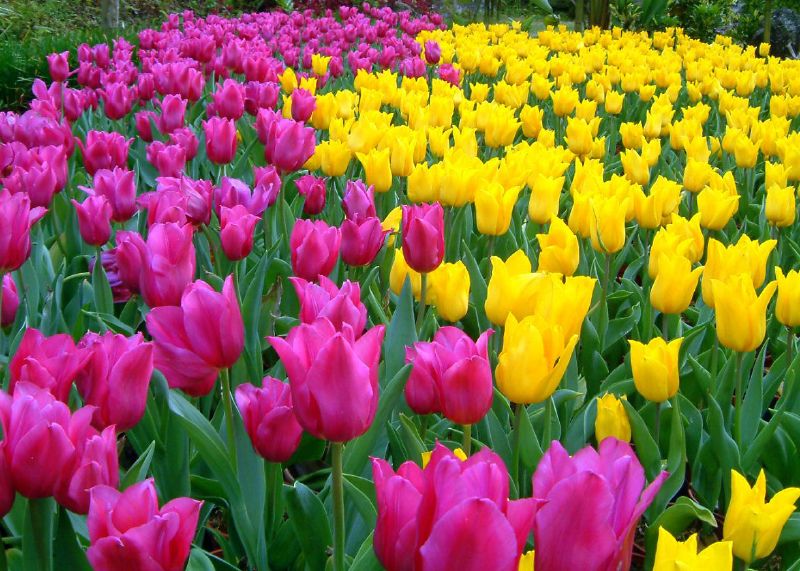
What Do You Know About Tulips?

Are you searching for the perfect flower and getting ready for your next planned event or wedding? Sometimes there is no right or wrong flower but a matter preference as to what fits your needs or what fits your personality. The 101 series is a series of articles helping to educate everyone with the contrasts of various flowers. You may want to read the others in this series as well as many other helpful articles.


There are five things to keep in mind with tulips:

1. Tulips are usually six-petaled, elongated cup-shaped flowers with slender stems and large broad leaves. Purchase or cut tulips of good size and color, although a little green tinge is all right€"they will continue to develop after cutting. The tulip should be firm to the touch, and upright. Check the inside of the blossoms for signs of pollen: The centers should be clean.

2. In aged tulips, the tips of the petals are discolored or have a transparent look. The center of the base shows signs of pollination, and the flower feels soft to the touch.

3. The so-called Dutch tulip is a shorter variety with smaller blossom size than does the French tulip. The French tulips are longer lasting as a cut flower.

4. Striped or variegated Rembrandt tulips look like flames of fire. Rembrandt tulips have long pointy petals. Parrot tulips have ruffles and fringe tulips have frayed edges.

5. When Arranging with tulips, leave plenty of room, as they continue to grow and develop after being cut. They also open and close, and reach and move towards the light. Always set an arrangement of tulips in indirect light. Large tulip leaves can be gently curled and tucked between blossoms to keep flowers in place and allow you to use fewer of them.

Here is so more factual information you may also find helpful.

Names - Tulip, tulipa

Varieties - There are 15 different divisions of tulips, with hundreds of species, the most common being the single tulip.

Colors - all colors and combinations are available except no true blue.

Scent - A few varieties have a mild, sweet scent, but most have none.

Freshness - Purchase or cut tulips when they show good size and color. A little green is fine. Tulips should be firm to the touch and upright. Check inside the blossom to see that no pollen has developed.

Vase Life - About 5 days. The French variety will last 7 days or longer.

Availability - January to May

Meaning - Declaration of true love. €I am hopelessly in love with you.€

Cost - Winter-moderately priced. Spring-inexpensive. The French variety: Winter - expensive, Spring-moderately priced.

Arranging Tip - Tulips change daily after cutting. Leave enough room for tulips to grow and move, even if they are manipulated somewhat to fit into certain combinations. See arranging tips 1, 8, 10, 13, 17, 18, 19, and 20.

Growing Tip - Tulips are easy to grow in the garden for spring color and can be forced to bloom indoors in the winter. They only bloom for a short time in the spring, so plant early-, mid-, and late blooming varieties to extend tulip time. Most tulips become exhausted after a year or two, returning shorter and smaller every spring, so pick varieties that €naturalize€ well.

Other - Tulips are heavy drinkers!

Now that you know a little bit more about tulips, it is time to check out some popular varieties.

Regular Tulips include: Assorted, rainbow, white, pink, yellow, orange, hot pink, red, lavender, purple, black jack purple.

French Tulips include: White, white Maureen, pink, yellow, orange, hot pink, red.

Wednesday, October 14, 2015

Plantwatch: Roadside wonders

Roadside verges are one of our great wild plant refuges. They are only narrow strips of land, but verges along our major roads total an area the size of the Isle of Wight. And they provide a home to more than 700 species of plants, almost half the native flora of Britain, with some of the last habitats left for many wild flowers, especially meadow plants – which is why the charity Plantlife is campaigning to get verges looked after better to encourage these wild plants.
Many of the roadside plants are flowering now, such as the familiar red clover, common buttercup, brilliant white oxeye daisy and the tall rosebay willowherb with its distinctive clusters of purply-red flowers. There are even rare flowers, such as the green-winged orchids on the M40 in Buckinghamshire, the Deptford pink in Devon and Worcestershire and wood bitter-vetch in Powys.

Perhaps most iconic of the roadside flowers out now is the beautiful star-shaped yellow flowers of St John’s wort. This was a magical flower in pagan rituals on Midsummer’s Day (traditionally 24 June and distinct from summer solstice) when the flower was burned on bonfires to purify crops. It was also believed to ward off witchcraft, although in Christian times Midsummer’s Day was turned into St John’s Day, hence the name of the plant. In herbal medicine, St John’s wort was also valued for treating wounds – recent research has shown that it can indeed fight bacterial infections – although its best known use these days is probably for calming the nervous system and treating sleeplessness and depression.

Wednesday, September 23, 2015

Propagating Chrysanthemums

Chrysanthemums can be propagated from seeds, cuttings, or plant division. Some chrysanthemum hybrids are patented and cannot be propagated without permission. This is usually indicated on the plant label.
Chrysanthemums actually like to be divided – the new clumps grow better than old, crowded ones. After the last spring frost when shoots are 1”- 3” tall, dig them up and carefully pull or cut apart. Throw away any half-dead or overly woody parts, and plant only the healthy divisions. Add a source of phosphorus to the planting hole, along with organic matter. Ideally, divide chrysanthemums every 3-5 years and relocate to reduce disease.

To propagate from cuttings, snip off a piece about 4”- 6” long, and remove the leaves on the bottom half. Dip in rooting hormone and insert about 1” into vermiculite, sand, or sphagnum moss. Create your own mini-greenhouse using a wire frame and plastic wrap, and place the plants under bright light (but not sunlight) until rooted.

To grow from seed, sow at least 2 months before first frost, or start indoors over the winter. The planting medium should be kept at 70-75 degrees, and seeds should germinate in 1-3 weeks.

Tuesday, September 8, 2015

How to plant tulip?

Planting

Nature never intended for bulbs to loll about above ground, so don't delay planting the bulbs after purchase.

 Plant tulip bulbs in the fall, 6 to 8 weeks before a hard frost is expected and when soils are below 60 degrees F. (See our frost charts.) This timing ranges from early autumn (Zone 4) to late autumn (warmer zones).

Tulips prefer a site with full or afternoon sun. In Zones 7 and 8, choose a shady site or one with morning sun only.

All tulips dislike excessive moisture. Ideally, the soil is well-drained, neutral to slightly acidic, fertile, and dry or sandy.

Rainy summers, irrigation systems, and wet soil are death to tulips. Never deliberately water a bulb bed. Wet soil leads to fungus and disease and can rot bulbs. Add shredded pine bark, sand, or anything to foster swift drainage.

You'll want to space bulbs 4 to 6 inches apart, so choose an appropriate plot size.

To deter mice and moles—if they have been a problem—put holly or any other thorny leaves in the planting holes. Some gardeners use kitty litter or crushed gravel.

If ravenous rodents are a real problem, you may need to take stronger measures, such as planting bulbs in a cage of wire.
Plant bulbs deep—at least 8 inches, measuring from the base of the bulb. And that means digging even deeper, to loosen the soil and allow for drainage, or creating raised beds. Remember, the bigger the bulb, the deeper the hole it needs.

Set the bulb in the hole with the pointy end up. Cover with soil and press soil firmly.

Water bulbs right after planting. Although they can't bear wet feet, bulbs need water to trigger growth.

If you're planning to raise perennial tulips, feed them when you plant them in the fall. Bulbs are their own complete storage system and contain all of the nutrients they need for one year. Use organic material, compost, or a balanced time-release bulb food.

Care

Water tulips during dry spells in the fall; otherwise, do not water.
Compost annually.

Deadhead tulips after flowering.

Allow the foliage to yellow for about 6 weeks after flowering before removing it.

The bulbs of Species tulips may be left in the ground for several years; others may be lifted annually, once the leaves have died down, and ripened in a warm, dry place.

Replant the largest bulbs; smaller bulbs may be grown in containers in a bulb frame, in mix of equal parts loam, leaf mold, and sharp sand. When in growth, water moderately, applying a balanced liquid fertilizer weekly for 3 or 4 weeks after flowering; keep dry in summer, and repot annually.

Monday, August 24, 2015

Using wild flowers in floristry and bouquets


A guest post by Fabrizio Boccha

When, years ago, I asked why nobody uses wild flowers in bouquets I was told, ‘They wilt too fast,’ or, ‘They drop their petals almost immediately.’

In fact , looking back on it I suspect the real reason was that they had fallen out of favour and had been replaced by larger blooms that were easier to cut and cheaper to supply to most florists’ shops.

At Common Farm with our ‘tithe to nature’ concept, we find sustainably grown wild flowers are chic, beautiful and sometimes beautifully scented. They also provide habitat and food for our invertebrate life.

Non of these are cultivars and all are indigenous. Some are from seed collected from our meadow, most are from Emorsgate Seeds who provide provenance information as well as guaranteeing UK origin, by identifying the county of origin too. By ‘farming’ wild flowers we are increasing their number and diversity here at common farm and we make sure that this system is fully sustainable.

Wow! All indigenous (ok, some argument over fox and cubs)

Lesser knapweed, Scabious( devils bit and field0, Oxeye daisey, Meadow buttercup, ladies bed staw, meadowsweet, wild carrot, corky fruited water dropwort, grasses; crested dogs tale and meadow barley, musk mallow, cow slip (this example out very late) red campion, gladdons , fox and cubs (???) and oregano.

It makes a fine looking bouquet but would be better with the adittion of some cottage garden flowers and in fact we always mix our flowers and think of the wild flowers as the spice added to the bouquet dish.